Ghost Services: The UK Producers Mining Night-Bus Tannoys for Club Gold
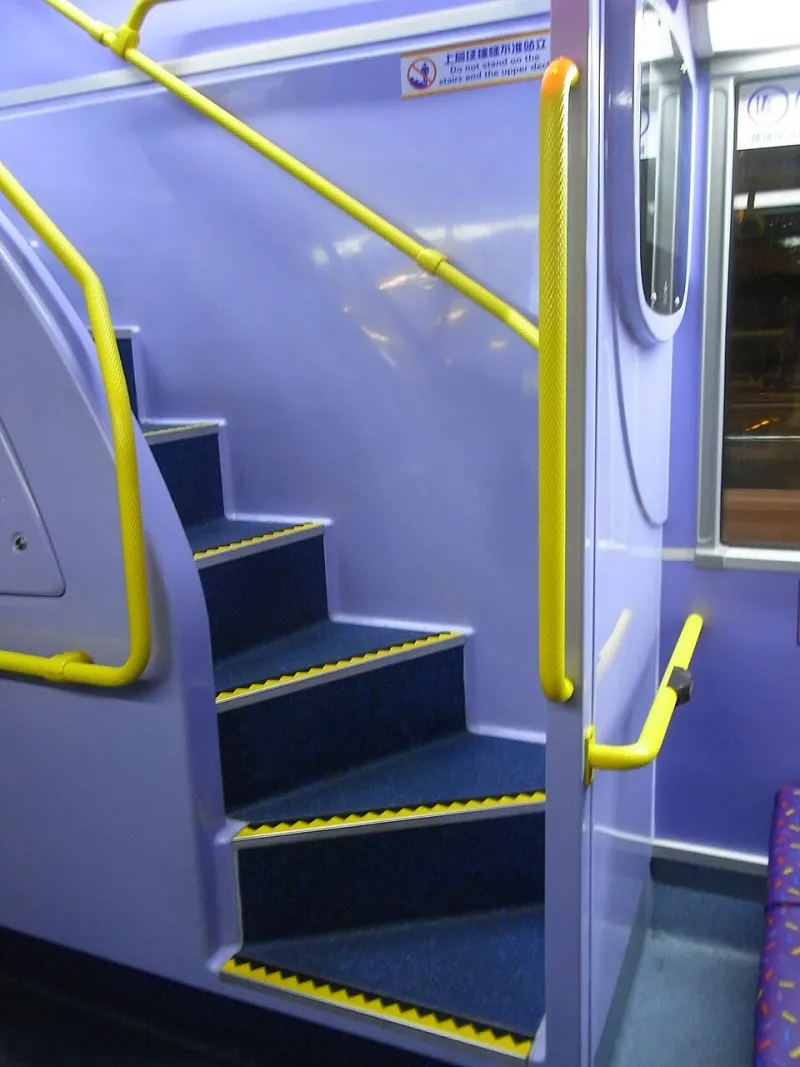
Photo: Barziealeuim, CC BY-SA 3.0, via Wikimedia Commons
At 00:47 on a Tuesday, the 205 to Bow Church announces itself like a ghost with a cold. 'This bus is for Bow Church,' says the tannoy, then a pause, then a click, then the same sentence again, slightly worse. Mara Voss is holding her phone to the shelter, recording. She will later pitch that loop down four semitones, stretch it to eleven seconds, and lay it under a kick drum that sounds like someone knocking politely on a door they know will not open.
Voss is one of a loose, growing group of UK electronic producers treating transport infrastructure as source material. Not as novelty, not as meme fodder, but as texture: the night-bus route call, the platform chime, the last-train apology, the automated voice that says 'mind the gap' with the warmth of a spreadsheet. After midnight, these sounds stop being information. They become atmosphere.
The haunted frequency of public address
'Trains and buses are designed to be understood, not listened to,' says Devon Pryce, a Bristol producer who has spent the past two years building a library of announcements from the Severn Beach line and the city's night buses. 'That's what makes them weird when you slow them down. The compression is aggressive. The reverb is whatever the station happens to have. The voice is trying to be helpful in a room that doesn't care. You get this uncanny politeness.'
Pryce's track 'Last Service to Avonmouth' is a case in point: a three-minute ambient piece built from a platform chime, a recorded apology about a cancelled stop, and a low synth pad that mimics the hum of fluorescent lights. It is, depending on your mood, either deeply soothing or a panic attack in slow motion. In the club, at 4am, it lands somewhere between the two.
The appeal is partly practical. Announcements are everywhere, they are repetitive, and they come pre-loaded with narrative. 'You don't have to write a vocal,' says South London producer Nadia Okonjo. 'The tannoy already has a character. It's tired. It's professional. It's slightly annoyed. That's more interesting than a lot of singers.'
Okonjo's 'Platform 2 (No Signal)' uses a fragment from a Southern rail announcement — 'we are sorry for the delay to this service' — as a rhythmic element, chopped and re-triggered until the apology becomes a kind of hi-hat. 'I'm not making fun of it,' she says. 'I'm just hearing it differently. At 1am, an apology sounds like a bassline.'
From field recording to 6am ambient
The techniques vary, but the pipeline is often the same. Record on a phone, ideally when the wind is low and the bus is idling. Clean the file just enough to keep the room. Pitch it down. Add reverb — not the pretty, plate kind, but the gritty, stairwell kind. Then decide whether to make it a song or a texture.
'There's a temptation to over-produce it,' says Voss. 'But the magic is in the failure. The announcement is already imperfect. If you quantise it too hard, you lose the ghost.'
Some producers use the announcements as one-shots: a door closing, a bell, a 'please stand clear.' Others build entire tracks around a single repeated phrase, treating the voice like a sample from an old soul record. The results sit on a spectrum from ambient to club, from 'music for the last bus home' to 'music for the moment the last bus doesn't come.'
The scene is small but visible. Labels are starting to notice. Earlier this year, a Leeds cassette imprint released a compilation called 'Service Disruption' featuring eight tracks built from Yorkshire transport recordings. It sold out in a week. A Bristol club night has started opening with a fifteen-minute 'platform ambience' set: no kick, no bass, just chimes and announcements and the sound of a train door beeping into the void.
A listening guide
If you want to explore the sound, start here. These are independent releases, mostly digital, mostly made at kitchen tables after midnight.
Mara Voss — 'Night Bus 205' (2026) A seven-minute ambient loop built from a Bow Church route call. The voice is pitched so low it sounds like a warning from the future. Best heard on headphones while walking past a bus stop you don't need.
Devon Pryce — 'Last Service to Avonmouth' (2026) A patient, melancholy piece that turns a cancellation apology into a chord progression. The chime arrives at 3:12 and feels like a door opening.
Nadia Okonjo — 'Platform 2 (No Signal)' (2026) A club track, sort of. The apology becomes a hi-hat, the chime becomes a lead, and the whole thing thumps like a train you can't board.
Various Artists — 'Service Disruption' (2026) The Leeds compilation. Eight tracks, all built from Yorkshire transport recordings. The standouts are a dubby rework of a Leeds station announcement and a two-minute piece made entirely from the sound of a ticket barrier.
Harrow Road Ambient Collective — 'Mind the Gap (Extended Mix)' (2026) Exactly what it says. Nine minutes of the same three words, treated with so much reverb that it becomes a kind of prayer. Divisive, but unforgettable.
The ethics of the tannoy
There is a question, of course, about permission. Transport announcements are not exactly music. They are recorded by public bodies, played in public spaces, and often performed by voices that belong to someone. Producers I spoke to were careful about this. Some use their own recordings. Some use Creative Commons audio. Some clear samples where they can. 'I don't want to rip off a train driver's voice,' says Pryce. 'I want to honour it.'
That instinct feels right. The best of these tracks don't mock the infrastructure. They slow it down until it reveals something tender: the weird poetry of a system trying to keep us safe, the loneliness of a platform at 1am, the fact that a bus announcing its destination can sound like a lullaby if you're tired enough.
After midnight, the city talks to itself. These producers are just holding up a microphone.