Petals After Last Orders: Britain’s Late-Night Florists and the 2AM Apology Economy
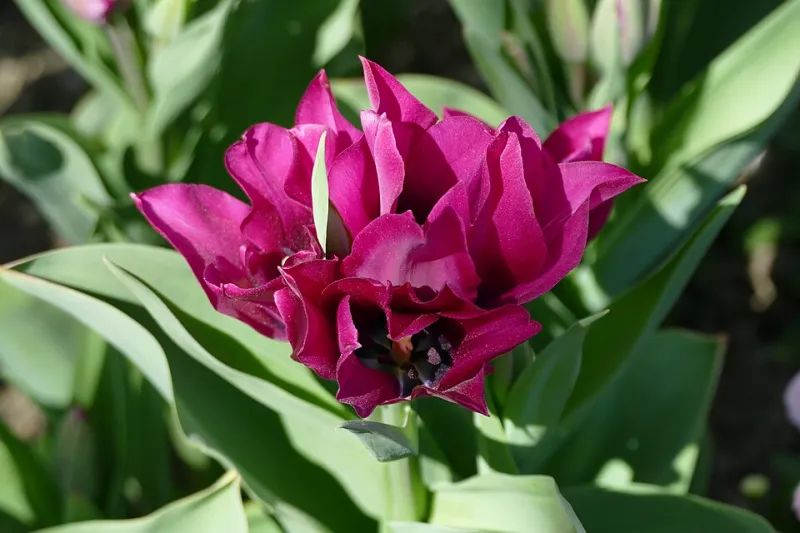
Photo: Kritzolina, CC BY-SA 4.0, via Wikimedia Commons
At 2AM, the city smells of two things: fried food and flowers. The first is obvious — the late-night chippy, the kebab van, the grimly cheerful glow of a burger hatch. The second catches you off guard. On a corner near a taxi rank, or under the fluorescent wash of a forecourt, there are buckets. Roses in plastic sleeves. Tulips standing to attention. A hand-written sign that says bunches from £8, as if the price were the most romantic thing about it.
The late-night florist is not a staple of the British high street. It is an exception, a small stubborn network of kiosks, garages, convenience stores and market stalls that keep odd hours because the city keeps odd hours too. And at 2AM, the people who buy flowers are not always the people you would cast in a romcom. They are clubbers with mascara halfway down their faces. They are nurses coming off a twelve-hour shift. They are people who have just said the wrong thing and are now trying to say it better with gypsophila.
The counter at the edge of the night
You find them in the gaps between other businesses. A flower stall outside a station that should be shut. A petrol station forecourt in Leeds where the bouquets sit next to the screen wash and the charcoal. A kiosk in Soho that stays open long enough to catch the last theatre crowd and the first cleaners. In Manchester, you might spot a seller near Canal Street with a bucket of roses and the expression of someone who has seen every version of the same mistake.
The forecourt bouquet is its own genre. It is not designed to be beautiful. It is designed to be available. The cellophane catches the light like a small, sad chandelier, and the flowers themselves are often sturdy rather than delicate — carnations, chrysanthemums, the kind of stems that can survive a night bus and a difficult conversation. In 2026, convenience is the real luxury. A dozen roses at 2AM costs more than it should, and everyone involved knows it.
Who buys flowers after midnight?
The customers arrive in waves. The first wave is the clubbers: groups spilling out of venues, someone peeling off to buy a bunch for the person they have been texting since 11pm. The second is the shift workers: bar staff, security guards, delivery riders, hospital staff who have finished late and want something that is not a kebab. The third is the freshly apologetic.
This last group is the most interesting. They do not browse. They do not ask what is in season. They ask what is open, what is cheap, and what says sorry without actually saying it. The apology rose is not a flower; it is a sentence with thorns. It means: I know I was wrong, I know it is late, and I know this does not fix it. The florist behind the counter is not a therapist, but they are often an unlicensed confessor. They wrap the stems in paper, add a sprig of something green, and say nothing.
The economics of remorse
Late-night flowers are a markup business. The same bunch that costs £6 at a daytime market can cost £15 after midnight. No one argues. The buyer is not paying for the flowers; they are paying for the hour. They are paying for the fact that the shop is open, the lights are on, and the possibility of a gesture still exists. Convenience is the product. Remorse is the market.
Petrol stations have become de facto florists because they are the only places that never close. Their bouquets are not curated; they are assembled. They are the floral equivalent of a garage sandwich — not good, but there. City-centre kiosks offer something more deliberate: a wrap of brown paper, a ribbon, a bit of advice. The sellers learn to read the transaction. There is a difference between the person buying flowers for a partner and the person buying flowers for a peace offering. The first wants colour. The second wants something that will not die before the argument is over.
A trade that never expected the night shift
For much of the twentieth century, the flower trade kept daytime hours. Markets started early, deliveries went out in the morning, and shops closed by teatime. The idea of a florist open at 2AM would have seemed absurd — a solution to a problem no one had admitted to yet. But the late-night city grew, and with it came the 24-hour garage, the all-night kiosk, the taxi-rank economy. The late-night florist is not a grand tradition. It is an improvisation.
That improvisation has its own etiquette. Do not ask for a receipt. Do not ask for a vase. Do not expect the seller to remember your name, even if you have been in three times this month. They will remember the flowers, though. They will remember the man who bought one rose and then came back for eleven more. They will remember the woman who asked for something that did not look like an apology, then bought the most apologetic bunch in the bucket.
Morning, and what remains
By 3AM, the queues thin out. The taxi rank clears. The kiosk seller starts consolidating the buckets, pulling out the stems that have given up. The night bus arrives, and someone gets on with a bouquet on their lap, holding it like a certificate. By morning, the cellophane is on the floor and the rose is in a pint glass. The gesture has been made. Whether it worked is not the florist’s business.
The late-night flower counter is not solving romance. It is not solving remorse, either. It is providing a temporary scaffold — a way to say something at an hour when words are unreliable and everything else is shut. At 2AM, that is enough. The petals will fall by Wednesday. The sentence, if it was the right one, might last longer.