Hold the Door: A 2026 Field Guide to the UK Club Queue
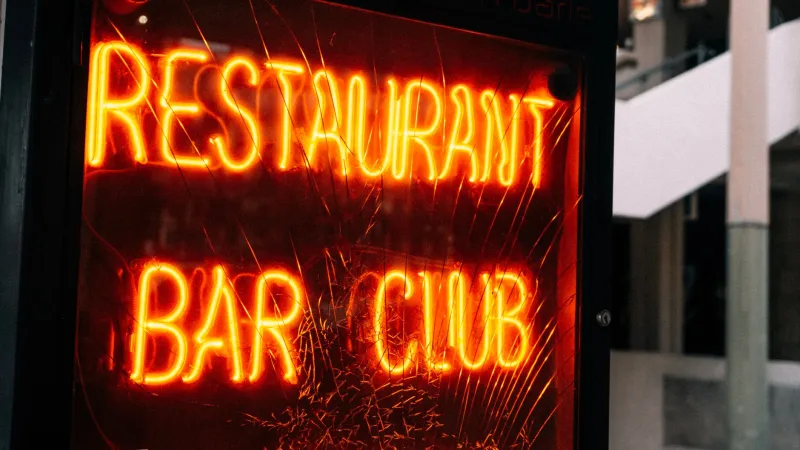
The queue starts before the queue. It starts on the group chat, at 9:47pm, when someone says 'we're leaving in ten' and someone else says 'we're leaving in twenty' and the person who is already outside the venue says 'there's no queue yet, come now.' By the time you arrive, there is a queue. There is always a queue. The queue is the point.
The queue is the overture
In 2026, going out in the UK means accepting that the night begins in a holding pattern. The door is not a barrier; it is a stage. The pavement is not a waiting room; it is a warm-up. You stand in a line that curves around a corner, and you perform: patience, nonchalance, the exact amount of excitement that says 'I am fun but not desperate.' You clock the outfits. You eavesdrop. You make a friend you will never see again.
This is not a complaint. It is an observation, and possibly a celebration. The queue is where the night's social contract is negotiated. Inside, the music is too loud to talk. Outside, you have twenty minutes to decide who you are.
A geography of the good queue
Not all queues are equal. The best ones have a view, a bit of shelter, and a critical mass of people who are interesting to look at. Manchester's Northern Quarter gives you brick, fire escapes and the occasional burst of rain. Peckham gives you a queue that spills past a kebab shop and a barbershop, which is useful if you need either. Leeds gives you a queue that knows each other. Glasgow gives you a queue that will talk to you whether you like it or not.
The worst queues are the ones that feel like a processing error: a single file of silent people outside a venue with no windows, no music leaking out, no evidence that fun exists. A good queue hums. You can hear the bass through the door, muffled and promising. You can see the door person doing their thing. You can smell someone's perfume and someone else's chips.
Door policy is a vibe check
The door person is the first DJ of the night. They decide the tempo. A good door person can look at a queue and tell you what kind of night it is going to be: loose, strict, chaotic, kind. In 2026, door policies have become more explicit and more mysterious at the same time. Some venues publish their policies online — no phones on the dancefloor, no sports trainers, no aggressive behaviour. Others rely on the ancient art of the vibe check.
The vibe check is not fair. It is not supposed to be. It is a bouncer's instinct, a promoter's guest list, a dress code that exists only in the eyes of the person holding the clipboard. You can argue about it, but you will not win. The best approach is to be early, be polite, and be prepared to be told no. The worst approach is to argue. The queue remembers.
Queue etiquette: the unwritten rules
- Do not cut. Not even if your friend is at the front. Not even if you are famous. Not even if it is raining. The queue is a democracy of the damp.
- Do not stand so close that you can smell the person in front of you. Unless you are both into that. You are not both into that.
- Do not play music from your phone. The queue has its own soundtrack: the muffled bass, the door opening, the occasional cheer. Do not compete.
- Do talk to strangers. This is the one place where it is socially acceptable to ask someone where they got their coat. Accept the compliment. Give one back.
- Do not film the queue for content. The queue is not a backdrop. It is a room. Put the phone away.
- Do share a lighter, a mint, a bit of gossip. The queue is a gift economy.
Outfit-spotting and the pre-club catwalk
The queue is the best runway in Britain. Inside, everyone is moving, sweating, disappearing into the dark. Outside, under a streetlamp, you get the full look: the coat, the boots, the tiny bag, the hair that took an hour but is pretending it didn't. You get the groups who coordinated and the people who clearly dressed for a different party. You get the person in a full-length leather trench who is going to be too hot in twenty minutes and knows it.
This is not superficial. It is research. The queue tells you what the night wants to be. If the queue is all silver and mesh, you are in for a certain kind of night. If the queue is all black and comfortable shoes, you are in for another. If the queue is a mix, you are in the right place.
When the queue becomes the set
The best queue I have ever been in was outside a venue in Peckham in the rain. Someone had a speaker. Someone else had a flask. A stranger started singing a song that everyone half-knew, and the queue joined in on the chorus. The door opened, and we went inside, and the DJ was good, but I still think about the queue.
That is the thing about door culture in 2026. The night does not start when you get inside. It starts when you stop minding the wait. The queue is not the delay before the set. It is the first set. The door is the drop. And if you are lucky, the person in front of you becomes the person you dance with.
Hold the door. But also, hold the queue.