Night Swings: The Floodlit Ranges Where Britain Goes to Miss Beautifully
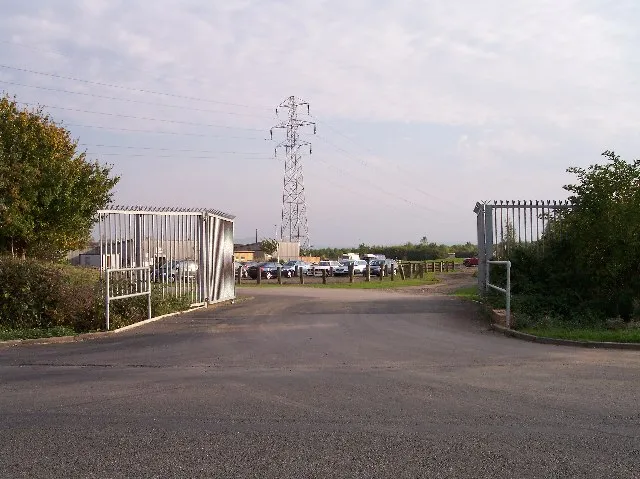
Photo: Bob Embleton, CC BY-SA 2.0, via Wikimedia Commons
It is 1.47am on the eastern edge of Leeds, and the floodlights are doing their best impression of a sunrise. Below them, a man in a sequinned jacket is addressing a bucket of 80 balls with the seriousness of a sommelier. He has come straight from a club in the city centre. His friends are still there. He is not. 'I needed to hit something that wasn’t a deadline,' he says, selecting a seven iron with the care of someone choosing a record. 'And I like the noise.'
This is Britain’s after-hours driving range: a floodlit field of synthetic turf, automated tees and vending-machine coffee, where the night does not so much end as dissolve into a series of small, satisfying thwacks. On paper, it is a golf facility. In practice, it is a decompression chamber with a dress code of absolutely nothing. In 2026, as more of the UK’s leisure economy stretches past midnight, the range has become an unlikely fixture of the after-dark circuit — not quite nightlife, not quite sport, and entirely itself.
The bucket economy
The first thing you notice is the sound. Not the soft click of a putting green, but the full-body crack of a driver meeting a ball, followed by the distant patter of it landing somewhere in the dark. The second thing you notice is the buckets: yellow, black, branded, stacked by the bay like ammunition. A small bucket costs about the price of a pint. A large one costs about the price of a cocktail. Nobody is here for a round of 18. They are here for a finite task.
'The 2am crowd is different,' says the night manager, who has worked the 10pm-to-6am shift at a range off the ring road for four years and asks not to be named. 'You get the clubbers first, obviously. Then the taxi drivers. Then the nurses and the warehouse lot. By four, it’s the ones who just can’t sleep. They all say the same thing: they want to hit a few balls and not think.'
She has seen birthdays, break-ups and one marriage proposal in bay 14. She has also seen a man in full black tie practise his swing for 90 minutes without removing his jacket. 'We don’t judge,' she says. 'We just refill the machine.'
A democracy of bad shots
What makes the driving range so odd — and so British — is how little it asks of you. There is no handicap, no dress code, no committee. You do not need to be good. You do not need to be dressed for anything in particular. At 2am, the bays hold a nurse in scrubs, two lads in football tops, a woman in a floor-length coat who has clearly left a party, and a taxi driver on his break, eating a Scotch egg between shots. The floodlights flatten everyone into the same silhouette.
'It’s the only place where being terrible is the point,' says Marcus, 34, a DJ from Birmingham who stops at a 24-hour range beside the motorway on his way home from sets. 'You can’t be bad at a club. You can’t be bad at the gym. Here, you can miss every ball and nobody looks up. It’s freeing.'
He comes for the ritual as much as the practice: the token, the tee, the first awful shot, the slow recalibration. 'It’s like a palate cleanser for the night,' he says. 'I’ve played some of my best sets after hitting a bucket at 3am. You get out of your own head.'
Between last orders and first bus
There is a particular hour — somewhere between the last orders exodus and the first buses — when the range becomes a waiting room for the night. The clubbers have thinned out. The shift workers are arriving. The coffee machine is doing overtime. In the bays, phone screens glow beside the floodlights, and people stand in silence, swinging, retrieving, swinging again.
A nurse called Priya, 29, has come after a 12-hour shift at a hospital in the Midlands. She is not a golfer. She has never been a golfer. 'I saw it open and I thought, why not,' she says. 'It’s better than going home and staring at the ceiling.' She hits a ball cleanly for the first time and looks genuinely surprised. 'That’s the thing,' she says. 'You get one good one and you stay for another twenty minutes.'
The range staff know this pattern. They call it 'the last bucket' — the one people buy when they should be leaving, the one that keeps them there until the sky starts to grey. 'We could close at 2,' says the night manager. 'But the people who need us most come after that.'
The quiet machinery of repetition
Why does hitting golf balls into the dark feel so soothing? Partly it is the repetition: the same motion, the same sound, the same small result. Partly it is the absence of a screen. You cannot doomscroll with a golf club in your hand. The range asks for a different kind of attention — physical, finite, forgiving.
'It’s a controlled failure,' says Tom, 41, a regular at a floodlit range in Kent who works in logistics. 'You hit a bad one, you hit another. Nobody dies. Nobody emails. The ball goes into the night and you never see it again. There’s something very clean about that.'
There is also the strange theatre of the place: the neon signage, the mist under the lights, the automated tees rising like small robots. It is a British leisure space that never really closes, even when it does. The floodlights stay on. The machine keeps filling. The night keeps going.
Last bucket, first light
By 4.50am, the mist has thickened and the sprinklers have started up on the far side of the range. A man in a high-vis jacket is packing his clubs into the boot of a car. A woman in gym leggings is still swinging, earbuds in, completely alone. The bucket is nearly empty. The sky is doing that thing where it is not quite blue and not quite black.
The range does not feel like a sport at this hour. It feels like a pause button. A place to stand under floodlights and hit balls into the dark until the day decides to start. The last bucket goes back on the counter. The night manager pours another coffee. Somewhere out on the turf, a ball lands with a soft, final thwack. Britain goes home, quietly, via the A-road.