Ten O'Clock at the Vitrine: The Friday-Night Museum Is Britain's Newest Room
Photo: Biswarup Ganguly, CC BY 3.0, via Wikimedia Commons
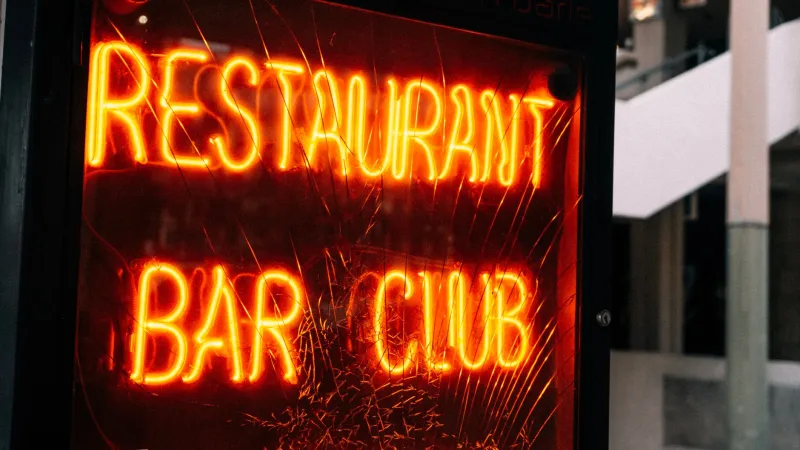
At 9.40pm on a Friday in east London, the queue outside a museum is doing that thing queues do when nobody is quite sure what they have bought: coats over arms, one couple splitting a bag of crisps, a woman asking whether there is a cloakroom. Inside, the atrium has been turned into a low-lit bar. A DJ is playing something between dub and soft-focus disco. The gift shop is shuttered. The galleries, improbably, are open.
This is not a club. But it is not quite a museum either. Across the UK, late openings—once a monthly novelty of warm wine and a wandering curator—have mutated into something closer to a night out. In 2026 the format has its own ecology: pop-up bars, DJs, torchlit tours, silent discos in Egyptian halls and a crowd that includes people who would never queue for a club. The appeal is obvious. A gallery gives you somewhere to be at 10pm without asking you to shout.
The cloakroom test
‘The first thing we look at is not the art,’ says Mara, a late-programmes producer at a London museum. ‘It’s the cloakroom. If people are carrying coats, they are not staying. If they can drop a bag and get a drink, they relax.’ She is only half joking. The museum late is a logistics exercise dressed as culture: bag search, bar queue, gallery stewards, last entry, last train. Get those wrong and the evening collapses into a school trip with a DJ.
At its best, the format works because it borrows the social rules of a club without the volume. You can talk. You can wander. You can stand in front of a painting for four minutes or four seconds. The lighting does a lot of the heavy lifting. Spotlit bronze, dark corners, a bar glowing in the atrium: it is a set design that makes everyone look like they are in a music video.
What a gallery gives a dancefloor
Programmers talk about ‘dwell time’—how long people stay—but the better measure is how long they linger. In London, one late-opening series has started placing DJs in transitional spaces: corridors, courtyards, the stretch between two galleries. ‘You want the music to pull people through the building,’ Mara says. ‘Not trap them in one room.’ The result is a kind of slow promenade. People drift towards the sound, look at something, drift back.
The crowd is not the usual Friday-night crowd. It is older, more mixed, more likely to be in trainers that have never seen a sticky floor. ‘I haven’t been out-out in years,’ says Yasmin, a first-time late-goer in London. ‘This is my idea of a night out now. I can be home by midnight and I’ve actually done something.’ That sentence could be the museum late’s entire marketing strategy.
Leeds: warm-up, not lecture
In Leeds, the civic museum late has become a Friday warm-up for people who are not ready to go home but not ready to go clubbing either. The bar is central; the galleries are open; the DJ is briefed to play ‘nothing too aggressive before 9pm’. A first-time visitor, Tom, tells me he came for a talk and stayed for the music. ‘I thought it would be a lecture with a glass of wine,’ he says. ‘It’s more like a party where you can also look at a mammoth.’
That is the promise and the risk. When it works, the museum becomes a third space: not home, not work, not quite club. When it doesn’t, it becomes a corridor with a licence.
Cardiff: torchlight and the school-trip shadow
Cardiff’s late openings have leaned into atmosphere: torchlit tours, low light, a bar in the hall. The best moments are almost theatrical—a group of strangers following a guide’s lamp past a case of ceramics while a bassline leaks through the floor. But the school-trip shadow is never far away. At one late, a guided ‘highlights’ tour at 10.15pm still ran like a field trip: single file, clipboards, a guide asking everyone to gather round a vitrine while the DJ bled through the ceiling.
The problem is not the guide. It is the timbre. The school-trip feeling arrives when the event forgets it is a night out: fluorescent strip lights, no drinks allowed in galleries, staff following you room to room, a tour that begins ‘does anyone know what this is?’ The museum late has to be confident enough to let people be slightly lost.
The school-trip problem
Where the format still feels like a school trip, it is usually because the museum is still treating the evening as a lesson with a bar attached. The fix is not to turn every gallery into a club. It is to trust the room. Dim the lights. Let the bar spill closer. Brief the stewards to be hosts, not hall monitors. And please, let people take a drink into the gallery if the floor can survive it.
At 10pm, the museum has one advantage over the club: it is full of things worth looking at. The trick is to let the night do the looking.
Last orders at the vitrine
Back in London, the bar is calling last orders. The DJ plays something slow and warm. People are not rushing for the door. They are doing up coats, swapping numbers, taking one last photograph of a sculpture they have walked past a hundred times and never really seen. The gift shop is still closed. Outside, the night bus is coming. The museum, for one evening, has done the thing clubs sometimes forget: it has sent people home happy.