Back Row, Last Train: The Quiet Rise of Britain’s 1AM Cinema Crowd
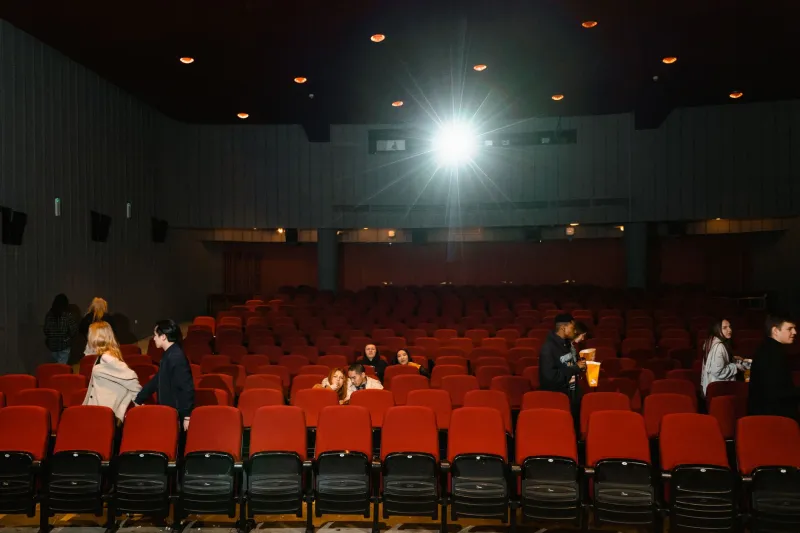
At 12.40am on a wet Saturday in Leeds, the queue outside an independent cinema is not for a club. It is for the second half of a sleepover double bill: a 35mm cult favourite, then a 1.05am mystery movie. Nobody is dressed for a dancefloor. There are tote bags, thermos flasks, a few sequins left over from a party elsewhere. The door staff are checking tickets, not IDs. And the room beyond is already dark.
This is not a novelty any more. Across the UK in 2026, independent cinemas have quietly built a nightlife without a dancefloor. Midnight and 1AM screenings, all-nighters, post-club double bills and members-only mystery slots are turning the auditorium into an after-hours social space. It is quieter than a club, cheaper than a bar and stranger than both. The projector is the headline act.
The room after the room
The usual night-out chronology has been rearranged. Instead of cinema as pre-drinks or a date that ends before the last tube, the screen becomes the final destination. You might come from a gig, a house party, a restaurant shift or simply from the sofa. The 1AM feature catches people who are not ready to go home but also do not want another loud room.
That is the appeal for audiences. A cinema offers what the club cannot always guarantee: somewhere to sit, a shared experience without forced participation, and a reason to stay out that does not depend on drinking. For sober nights, it is a lifeline. For the post-club crowd, it is a soft landing. For film obsessives, it is simply the best time to see something weird.
Venues have noticed. The Prince Charles Cinema in London has long made late-night cult programming part of its identity; Peckhamplex has its own late crowd; Glasgow Film Theatre, Tyneside Cinema, Broadway in Nottingham and the Cube in Bristol have all leaned into events that stretch past the last train. The details differ, but the pattern is consistent: programmers are treating the small hours as a slot with its own audience, not a graveyard shift.
A different kind of door policy
The dancefloor has a door policy based on queue, dress, age, mood and sometimes luck. The 1AM cinema has a different one. You need a ticket, a tolerance for other people's crisp packets and an understanding that the film will not pause for you. That is roughly it.
This makes for an unusual crowd. Students mix with night-shift workers. Couples on a third date sit near groups of friends who have come straight from a club. There are people who have never been to a midnight screening before and people who plan their month around them. The atmosphere is not rowdy, but it is not solemn either. It is the sound of a room agreeing to pay attention together.
Programmers talk about the post-club brain. At 1AM, nobody wants a three-hour historical epic with subtitles and a complex family tree. They want a film with a pulse: a cult classic, a trashy thriller, an anime favourite, a horror that plays better when the city outside is empty. Double bills work. Surprise screenings work. Themed nights work, especially when the theme is loose enough to be a joke and specific enough to be a club.
The economics of staying up
Late-night cinema is not a licence to print money. Staffing costs rise, transport gets awkward and licensing rules do not disappear because the film is cool. But the economics are more interesting than they look. A 1AM ticket is often cheaper than a club entry, yet the cinema can still make money on memberships, bar sales, merchandise and the simple fact that the room is already open.
For independent venues, the late slot also solves a problem. Early evening screens are crowded with new releases and mainstream bookings. The small hours are where personality can live. A cult screening at 1AM does not need to beat a blockbuster; it needs to fill enough seats to justify the projector, the staff and the strange joy of it. When it works, it builds loyalty. People come back because the venue feels like it knows them.
There is also the question of what a night out costs now. A club ticket, a round of drinks and a taxi can add up quickly. A late cinema ticket, a bag of sweets and a night bus home is a different proposition. It is not cheaper for everyone, but it is simpler. You know what you are getting. You know when it ends. And you can leave without explaining yourself.
Programming for the after-hours
The best late-night cinema does not try to pretend it is a club. It leans into what it is: a dark room, a big screen, a shared secret. That means programming with rhythm. A short before the main feature. A DJ in the bar, not on the dancefloor. A host who introduces the film in five minutes, not fifteen. A break long enough to get a drink but short enough to keep the room.
Some venues have turned the whole night into an event. Sleepover marathons run from midnight to breakfast. Mystery movies keep the title secret until the lights go down. Post-club screenings start at 2AM and end when the first buses begin. These are not gimmicks for their own sake. They are ways of giving the night a shape.
The audience responds to that shape. A 1AM screening has a beginning, a middle and an end. It does not ask you to dance, network or shout over bass. It asks you to sit in the dark with strangers and feel something. In 2026, that is starting to look less like a niche and more like a proper nightlife option.
Last train, first scene
The transport problem is real. In London, the night tube helps; elsewhere, the last bus is a character in every late-night story. Venues that programme past 1AM learn to work with taxi ranks, night buses and the simple fact that some people will leave early. The best ones do not fight it. They build it into the night: a bar that stays open after the credits, a playlist for the walk to the bus stop, a cloakroom that does not close until the room is empty.
That is where the cinema starts to feel like a scene. Not in a loud, obvious way. More like a room full of people who have decided that the night does not have to end at the same time for everyone. The dancefloor will always have its place. But the 1AM screening has found another one: the back row, the last train, the quiet walk home with a film still running behind your eyes.
After Nyne's beat is the hours after dark, and this is one of the more interesting things happening in them. Britain's independent cinemas are not competing with clubs on volume. They are competing on atmosphere. And at 1AM, with the projector humming and the city outside finally quiet, that is a fight worth staying up for.