When the Door Wins: A Night With Britain’s Late-Shift Locksmiths
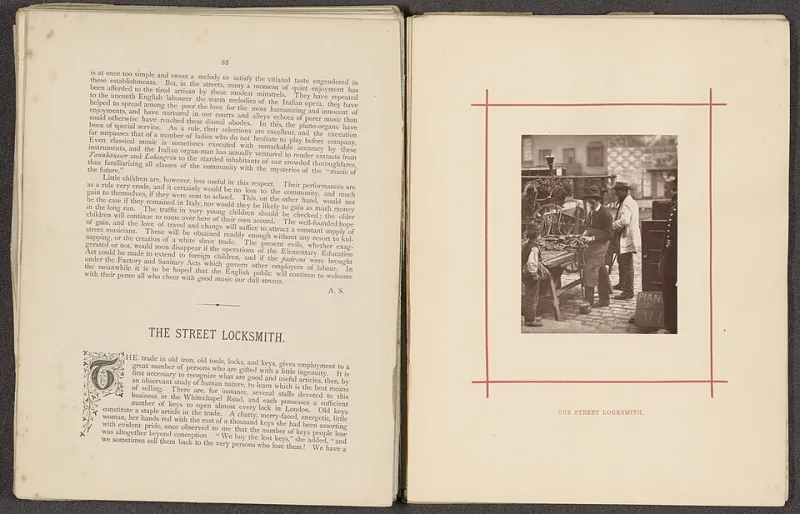
Photo: Rijksmuseum, CC0, via Wikimedia Commons
At 3.12am on a wet November night in Leeds, the city has shrunk to a series of doors. The clubs are still exhaling. The taxi ranks are thinning. The bus shelters hold the last smokers and the first shift workers. And outside a fourth-floor flat near the ring road, a woman in a sequinned top is explaining that her keys are on the wrong side of a Yale.
The locksmith — we will call him M., because he would rather his night’s work stayed between him and the client — is already on his second job. The first was a student locked out of a shared house in Hyde Park. This one is a birthday that went on longer than the keys did. He listens, asks for ID and proof of address, then sets a small torch between his teeth and goes to work on the lock with the unhurried air of someone who has seen this exact night a hundred times.
The 2am to 5am window
Locksmiths do not advertise themselves as nightlife workers. They are not bouncers, not minicab drivers, not the people handing out chips at the end of the road. But the overnight call-out is one of the few trades that reads the city after midnight from the outside in. A lost key outside a club is one kind of call. A lock change after a bad date is another. A snapped uPVC handle, a jammed mortice, a flatmate who has gone to bed with the only set — these are the small domestic cliffhangers that keep the van moving.
M. says the calls fall into three rough categories: the predictable, the practical and the personal. Predictable is Friday and Saturday, 1am to 3am, when the pubs and clubs empty and pockets turn out to be less reliable than they felt at 11pm. Practical is the early hours of a weekday, when someone has come home from a late shift and the door will not budge. Personal is the call he does not talk about much: the lock change after a relationship has soured, the key that may have been copied, the ex who knows the code, the flatmate’s friend who stayed too long.
That last category is where the night gets complicated. A locksmith is not a counsellor and does not pretend to be one. But he is often the first person someone sees after a decision has been made. The job is technical. The reason for it rarely is.
A city measured in cylinders
On the road, the map is not made of landmarks. It is made of door types. Victorian terraces with stiff mortice locks. New-builds with flimsy handles and smart-entry panels that have decided to sulk. Student houses where the front door has been painted so many times that the key no longer wants to go in. The locksmith’s night is a tour of the city’s soft spots, the places where private life meets a mechanism that has stopped cooperating.
M. quotes before he drills. That matters. The after-hours trade has a reputation problem — the internet is full of stories about vulnerable people being charged telephone numbers to be let back into their own homes. The legitimate end of the business is keenly aware of it. Accreditation, ID, a clear price, a receipt: the good operators treat the 3am call with the same paperwork as a 3pm one. At night, though, those small rituals of trust feel bigger. You are letting a stranger touch the barrier between you and the street.
At one address, a man in his fifties has locked himself out while taking the bins down. He is calm in the way people are when they have already shouted at themselves. At another, a young couple are locked out with a takeaway going cold on the step. They laugh, a bit too brightly. The locksmith does not join in. He works, tests the cylinder, hands back the keys. The whole thing takes ten minutes. The relief lasts longer.
The bad-date lock change
Not every call is a lockout. Some are the opposite: a request to make sure a door cannot be opened by someone else. The lock change after a bad date has become its own quiet genre of night work. It is rarely dramatic. It is a person standing in a hallway at 4am asking for the barrel to be swapped, because a key was lent and not returned, or because someone knows the flat too well, or because a break-up has just become a security question.
The locksmith’s role is to be practical without being nosy. He does not ask for the story. He asks whether the old keys are accounted for. He explains the difference between a basic cylinder and something with a bit more bite. He clears up the swarf. Then he leaves, and the flat becomes a different kind of room.
In that sense, the overnight locksmith is part of the night’s care infrastructure, though he would probably hate the phrase. He is not there to make anyone feel better. He is there so the door closes properly, so the chain sits right, so the first cup of tea after a bad night is drunk behind a lock that has been chosen rather than inherited.
Who gets let in
There is an ethics to the job that the best locksmiths take seriously. Check ID. Check proof of address. Be wary of the story that is too smooth. At 4am, those checks are not just admin. They are the difference between helping someone home and helping someone into someone else’s home.
M. says he has turned down work. He does not elaborate. The trade has its own code: if something feels wrong, slow down. Ask another question. Offer to wait while the client calls a letting agent. The night economy runs on trust, but trust is not the same as gullibility. The city after dark is full of people who need a door opened and people who should not be given a key. The locksmith stands between them with a drill and a clipboard.
By 5am, the sky over the ring road is a thin grey line. The first buses are moving. A bakery is turning on its lights. M. checks his phone, sighs at a job in Wakefield, and says he will do one more before breakfast. The night has not been dramatic. It has been a series of small doors, each one a reminder that getting home is not always as simple as it looks from the dancefloor.
For After Nyne, that is the secret map of the night: not the clubs on the flyer, but the doors people cannot open, and the quiet, torch-lit work of letting them back in.