Mic Warm, City Quiet: The After-Club Karaoke Booth Is Britain’s New Confessional

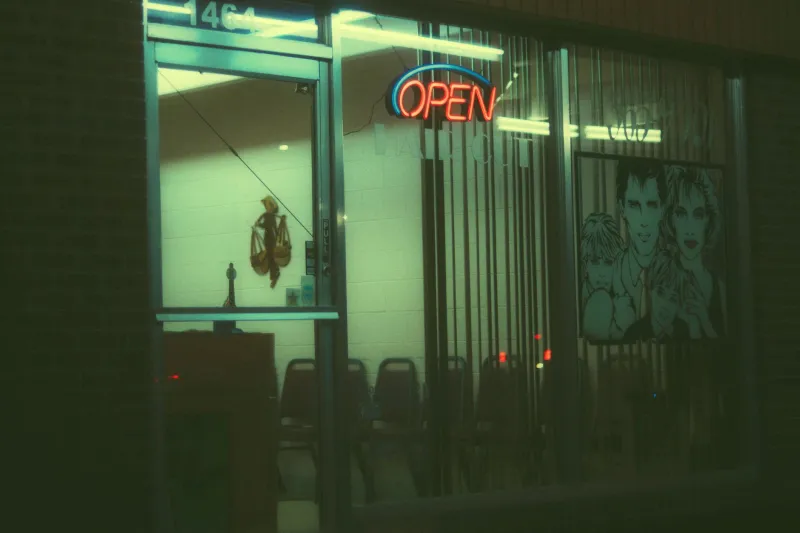
Photo: private karaoke booth neon lights late night London friends singing, via shop.parallellearning.in
The club has ended in the usual way: lights up, coats retrieved, a half-hearted debate about whether anyone really needs a taxi or whether the night bus counts as a personality. Then comes the fork in the road. Home, or the room with the microphone.
In 2026, the private karaoke booth has become Britain’s most reliable afterparty. Not the rowdy bar mic of a Friday office do, but the bookable room — usually small, usually neon-lit, often tucked above a noodle bar or behind an unmarked door in Soho, Manchester’s Northern Quarter, Birmingham’s Gay Village or a Leeds side street. These are spaces that stay open well past last orders, where the door closes, the outside world goes muffled, and a group of people who have just spent four hours shouting over a bassline suddenly have to listen to each other.
That is the strange gift of the late karaoke booth. It is not really about singing. It is about what happens when the performance pressure drops.
The third room
Nightlife has always had its stages: the dancefloor, the smoking area, the taxi rank. The karaoke booth is a fourth space, or perhaps a third room after the main room and the smoking area have both done their work. It is intimate without being domestic. Public without being exposed. You are among strangers in the building, but behind the door you are among your own people — or, occasionally, among people you have just met and may never see again.
Owners I spoke to describe the same rhythm. The first twenty minutes are chaotic: drinks arranged, songs argued over, someone trying to connect a phone to a screen that does not want to be connected. Then the room settles. The extroverts exhaust themselves. The quiet one takes the mic and turns out to have been waiting all night. By 3am, the song choices have stopped being ironic.
That is when the booth becomes a confessional with a backing track.
The songbook is a social contract
There is etiquette to this, and it is stricter than it looks. Do not queue a twelve-minute epic unless you have read the room. Do not sing two in a row unless the room has explicitly granted you a residency. Do not choose a song solely to demonstrate technical ability; the booth is not a audition. And never, ever hog the tambourine.
The best late-night rooms understand that the songbook is a mood board. A run of ABBA into Arctic Monkeys into a maudlin ballad is not random; it is a group conversation in code. In 2026, the sober-curious crowd has made this code more visible. Without the softening blur of a big night out, people are choosing songs with a little more intent. They are also, according to several room managers, staying longer and spending more on snacks than on alcohol.
One booth owner in Glasgow told me the late shift has become less about parties and more about small groups of friends who want somewhere to land after a gig or a club. They arrive with a bag of chips, a playlist of unfinished arguments and a shared need to sing something ridiculous until everyone is laughing again.
The acoustics of oversharing
The rooms are not good for singing, technically. The ceilings are low, the walls are thin, the speakers are often doing their best. But the acoustics are perfect for something else: the sound of a group of people agreeing to be a bit foolish together.
That is why the late-night booth has survived the age of the home karaoke app. You can sing in your kitchen, but you cannot recreate the moment when a stranger in the next room launches into the same chorus and, for a second, the whole corridor becomes a very small, very chaotic choir. You cannot recreate the walk to the 24-hour shop afterwards, throat raw, ears ringing, feeling oddly known.
In a city that is increasingly good at selling experiences, the karaoke booth remains stubbornly unpolished. The carpet is sticky. The remote control is missing a battery. The songbook has a page missing. That is part of the appeal. It asks for participation, not admiration.
Keeping the mics warm until dawn
The people keeping these rooms open are not romantic about it. They talk about licensing, soundproofing, cleaning rotas and the delicate art of knowing when a room needs a fresh jug of water and when it needs to be left alone. They also talk about the 4am crowd with something like affection: the nurses, the DJs, the bar staff, the people who finish work when everyone else is going home.
By the time the first bus grumbles past, the booth has done its job. It has turned the end of the night into a soft landing. It has given the afterparty a shape that is not just more drinks, more noise, more crowd. It has made a small room feel like the most honest place in Britain after dark.
And if you are the last one holding the mic at 5am, singing something you would never admit to in daylight, that is between you, the sticky carpet and the city outside. The booth will keep the secret. It always does.