Wet Ink at Wrong O'Clock: Inside Britain's All-Night Zine Rooms
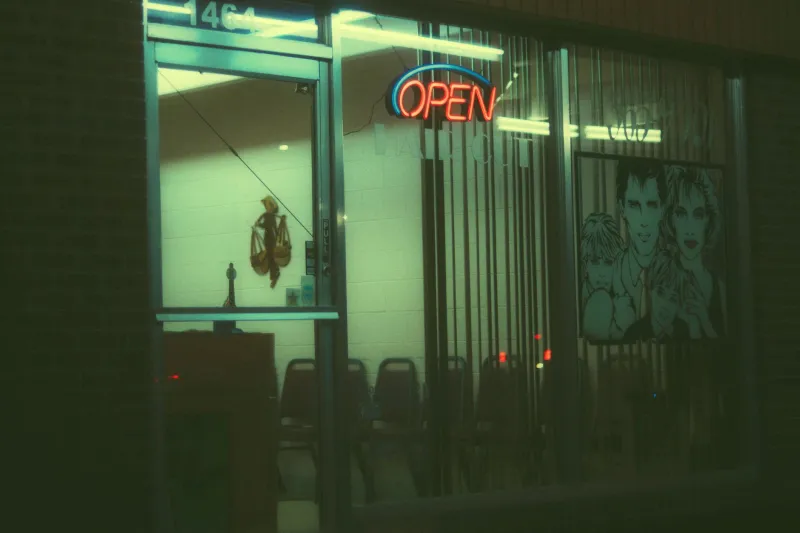
At 2.15am on a Thursday in Peckham, the loudest thing in the building is a stapler. It thumps through twenty pages, then another twenty, and a woman in a bucket hat and a wet-look cycling jacket slides the finished zine into a crate marked TAKE ONE. Behind her, a risograph hums like a fridge with ambitions. Somebody's playing dub from a laptop at a volume that suggests the neighbours have already been consulted.
This is a zine lab: part workshop, part green room, part very specific form of after-hours nightlife. Across the UK — in Leeds basements, Glasgow community centres, Bristol café back tables and a former textile unit in Manchester — late-night print sessions are quietly becoming the place people go when the club shuts but the night hasn't finished. You don't need a wristband. You need a fiver for paper and a tolerance for smudged ink.
The hours between last track and first bus
The appeal is partly logistical. Britain's night-time economy has spent 2026 learning to stretch itself — later openings, earlier openings, listening bars, all-night bakeries — but the awkward gap between 3am and the first bus remains stubbornly under-served. Zine rooms fill it with something cheap, social and gloriously analogue.
"It started because we didn't want to go home," says Marek, who runs Rough Cut, a monthly overnight print session in a shared studio off an industrial estate in Leeds. "People finish a set and they're still buzzing. They don't want a taxi and a scroll. They want to make something with their hands and talk nonsense for three hours. That's what this is."
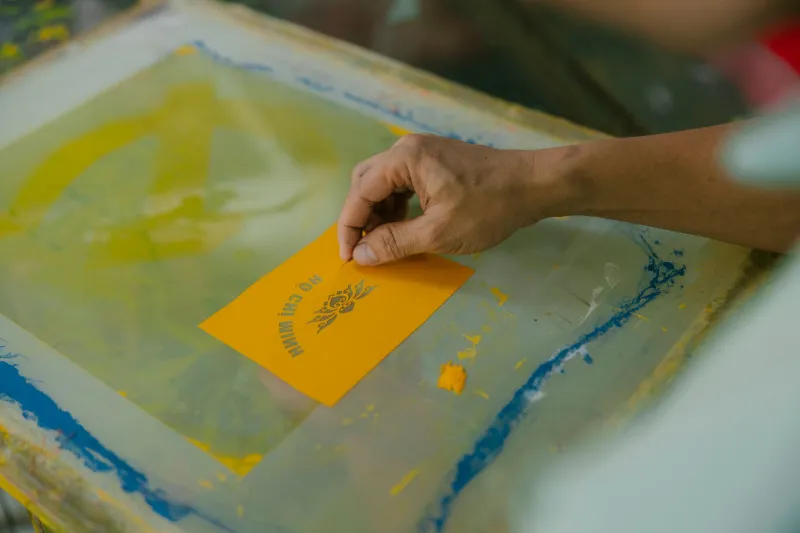
The format varies. Some labs are ticketed, with a risograph tech on hand and a theme — your worst night out, flyers for clubs that don't exist, a letter to the DJ who changed your life. Others are looser: a photocopier, a long table, a kettle, and a WhatsApp group that pings at midnight with the address. Most run until 5 or 6am. A few carry on until the café upstairs opens for breakfast and the smell of the paper starts competing with the smell of bacon.
Risograph, not rosé
What unites them is the texture. A zine made at 4am has a particular look: slightly off-register, ink on the fingers, a staple that hasn't quite gone through the middle. It feels like a scene report because it is one, produced in the same hours it describes.
"You can't fake the energy of a 4am print run," says Priya, a DJ and illustrator who co-runs Soft Reset, a Bristol night that pairs a club set with a post-club zine table. "People arrive a bit wrecked and very honest. The drawings are weirder. The writing is shorter. It's the opposite of a branded content campaign. It's just people saying: this is what tonight felt like."
That honesty is the point. At a time when so much nightlife documentation is a story post or a shaky video, the zine lab makes something you can hold — and, crucially, give away. There's a trade economy in the rooms: a sticker for a poem, a photocopied flyer for a mix, a hand-drawn map of a club that closed in 2019.
Who's actually in the room
On a typical Saturday session in Manchester, the guest list reads like a cross-section of the after-dark economy: two promoters folding flyers for next week, a poet who's been booked for a 1am slot and wants something to sell, a producer photocopying tracklists, a clubber who came in because a friend said there'd be tea. The age range skews twentysomething but isn't exclusive. Neither is the skill level.
"We get people who've never used a risograph and people who've been self-publishing since the 90s," says Jo, who helps run Papercut, an all-night lab in a converted café in Glasgow's East End. "The only rule is you make something. It can be one page. It can be bad. It can be a drawing of the bouncer. Actually, the drawings of the bouncer are usually the best ones."
The rooms also function as a low-stakes social space — somewhere to be at 3am that isn't a club, a taxi rank or a kitchen. For people who love nightlife but don't always want to be in the middle of a dancefloor, that's quietly significant.
The economics of a 3AM staple
None of this is free, exactly. Paper costs money. Ink costs money. Venues need a reason to stay open past licensing hours. Most labs run on a sliding scale: £3–£8 on the door, free for anyone who can't pay, with the gap covered by zine sales and the occasional grant. It is not a business model so much as a shared enthusiasm with a spreadsheet.
"We're not trying to be a brand," says Marek. "We're trying to be a room. If it gets too professional, it stops being fun and starts being content. We're not interested in content."
That attitude might be why the scene feels like it's accelerating. In the past year, labs have popped up alongside listening bars, late-night bookshops and after-hours record fairs — part of a wider 2026 mood that treats the small hours as a place to do something rather than simply endure until bedtime. The zine is the perfect artefact for that mood: cheap, fast, personal, and impossible to doomscroll.
The print hangover
By 5.30am in Peckham, the crate is full and the room smells of hot toner and somebody's cold chips. The dub has given way to a playlist of ambient country. A woman is stapling the last of a zine about a bus route she used to take home from a club that no longer exists. She isn't rushing. The first bus isn't due for another twenty minutes.
Outside, the sky is doing that thing where it's not quite light. Inside, the staple gun keeps going. It's not a dancefloor. But it's a scene, printed in real time, one smudged page at a time.