Cable Coils at Closing Time: Britain’s Load-Out Crews and the Secret Life of 3AM
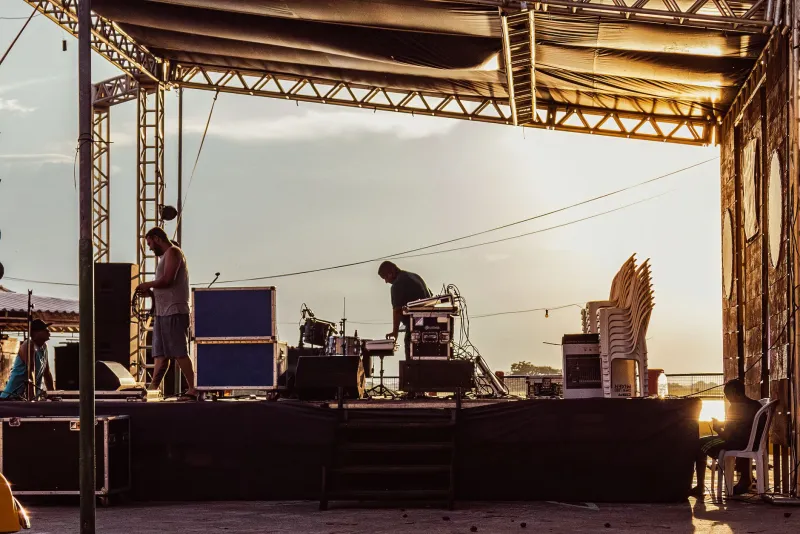
The last chorus has been sung. The house lights are up, the floor is a slick of spilled lager and glitter, and the audience is filing out into a cold British night with the songs still stuck in their heads. For most people, the gig is over. For the load-out crew, it has barely begun.
The Second Show Behind the Curtain
By 11.30pm the venue has become a different organism. The stage that looked like a cathedral of light an hour ago is now a puzzle of flight cases, cable ramps and gaffer-taped marks. A crew chief in a headtorch walks the room with the calm of a man who has done this ten thousand times. Radios crackle. Someone is already wrapping a drum riser in a blanket. Someone else is asking, with real urgency, where the good trolley has gone.
This is the part of live music that rarely makes the poster. It is physical, repetitive and oddly intimate. The audience sees the artist; the crew sees the underside of the artist’s night: the sweat on the monitor desk, the half-empty rider, the towel that has to be bagged before it becomes a biohazard. Load-out is not glamorous. It is, however, deeply skilled. A good crew can make a six-hour dismantle feel like a conversation.
Flight Cases and the Choreography of the Quiet Hustle
The rituals are specific. Cables are coiled over-under, never twisted. Cases are stacked by weight and destination, not by size. The drum kit comes down in a sequence that anyone outside the crew would find baffling and anyone inside would find obvious. There is a right way to tape a label and a wrong way to roll a flight case, and the wrong way will be noticed.
The language at 3AM is shorthand. A nod towards the back wall means the barriers need to move. A raised hand means stop, wait, someone is underneath. There is banter, but it is not the loud banter of the bar. It is the low-grade patter of people who are tired and competent and know that the van is waiting. The jokes are small and repetitive, which is another way of saying they are comforting.
Then there is the van playlist. Every load-out has one, usually controlled by whoever is driving or whoever has the aux cable and the strongest opinions. It might be dub, it might be Fleetwood Mac, it might be a regional grime mix from 2014 that nobody has the heart to skip. The playlist is not background music. It is a tempo map. When the tempo drops, the crew is pacing itself. When it lifts, the last cases are going in.
The Green Room After the Green Room
Once the trucks are loaded, there is a strange exhale. Some crews sit on the tailgate with a takeaway coffee and a service-station pasty. Others walk the room one last time, checking for a forgotten laptop charger or a stray monitor wedge. The venue staff are locking up, and there is a brief, unspoken negotiation about who gets the last of the ice.
The camaraderie here is not sentimental. It is practical. These are freelancers, often moving between venues and tours, and the person beside you tonight might be the person who gets you a shift in Glasgow next month. Reputation is built on small things: turning up on time, not complaining about the heavy case, knowing when to shut up. The load-out crew is a community with no membership card and a very long memory.
A City Without an Audience
By 4.30AM, the streets outside have changed. The queues at the kebab shop have thinned. The early cleaners are out. A night bus hisses past with three people on it. The crew knows this city in a way the audience does not. They know which side door sticks, which loading bay has the lowest kerb, which 24-hour garage makes the best coffee in a five-mile radius. They know the difference between a venue that respects its crew and one that treats them like a human forklift.
This winter, with touring costs still stubborn and venue margins tighter than ever, that difference matters. The load-out is not an afterthought. It is the thing that makes the next night possible. A bad turnaround can cost a tour a day. A good one is invisible.
The Last One Out
At 5AM, the venue is empty but changed. The stage is a black rectangle. The bar is a line of upturned stools. The floor has been swept, or at least swept at. The crew piles into a van that smells of coffee and deodorant and the particular dust of a thousand gigs. Someone puts the radio on. Someone else is already asleep against the window.
The night is over for the audience. For the crew, it is finally quiet. They have spent the last few hours taking apart the thing that made everyone else feel alive. And in doing so, they have kept their own strange, after-hours world turning. The 3AM shift does not ask for applause. It just asks for the next case to be stacked right.