Coin Slot Down: Night Call With Britain's Jukebox Repair Engineers
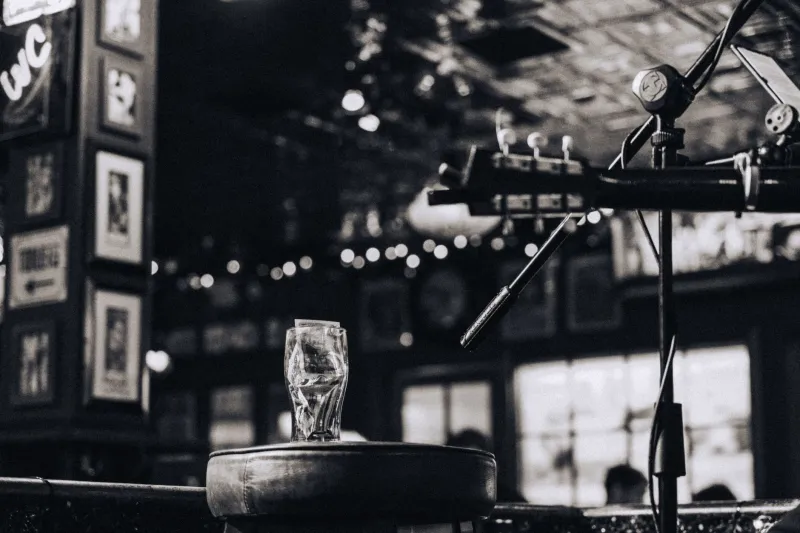
The pound goes in at 11:04pm. Nothing comes out. No clunk, no whirr, no arm swinging across the stack — just a landlord named Bev saying a word her mother wouldn't like, and twelve people at the bar turning to look at the corner as though a pet had stopped breathing.
By 11:20 the pint glasses are still full. By 11:40 someone has tried the old trick of hitting it, gently, then less gently. And by midnight, Bev is on the phone to a man in a van somewhere near Wakefield who answers on the second ring and says, "What's it doing?"
This is the jukebox repair circuit: a quiet, unglamorous, faintly heroic trade that runs on late calls, motorway service stations and the peculiar panic of a pub that suddenly has no music.
The call always comes at last orders
"Nobody rings me at two in the afternoon," says Dean Marsden, who has fixed coin-ops across West Yorkshire for nineteen years. "They ring me when they've got a room full of people and the machine's swallowed four quid. It's never a convenience call. It's an emergency with a soundtrack."
He keeps a flask in the van, a torch on a lanyard, and a mental map of every pub between Leeds and Huddersfield with a back door wide enough to wheel a cabinet through. Most nights it's something small: a coin jammed sideways in the mech, a belt slipped, an optical sensor furred with twenty years of cigarette smoke and dust from a building site over the road.
Other nights it's the whole processor. Those are the nights he sits on a stool in an empty bar at 2AM, cabinet open, landlord hovering, and does something that looks a lot like surgery.
Bench work, fluorescent light, and a stack of 45s
The workshop is where the romance lives. Shelves of Seeburg and Rock-Ola parts, coils of speaker cable, a drawer labelled, in marker, "SIXPENCES + OTHER GHOSTS". In one corner, a 1970s cabinet waits for a new amp, its chrome still bright enough to catch the strip light.
"There's a whole economy in keeping old machines alive," says Priya Raghavan, who runs a repair outfit out of a railway arch in Sheffield and takes calls from as far as Lincoln. "A pub can buy a new digital box for less than a full restoration. But nobody's nostalgic about a new box. They're nostalgic about the one that's been there since 1984 and still has a Wham! B-side stuck in the carousel."
The compromise most landlords land on is the retrofit: original cabinet, original glass, modern guts. A screen hidden where the record stack used to be, streaming where the 7-inch used to drop. Purists hate it. Landlords love it, because it doesn't jam on a Saturday.
"I've done hundreds of those," Priya says. "And every single time, the regulars ask me whether the old records are still in there. They're not. But I've started keeping them. Feels wrong to bin them."
The crisis is not really about the machine
Spend a night on the circuit and you notice something: nobody is that upset about the money. A stuck pound is a story. A silent pub at ten past eleven is a mood shift you can feel.
"A jukebox does a job that a playlist can't," says Callum, who's run a late-licence boozer in Bristol for eleven years and has Dean's number saved as "JUKEBOX MAN — DO NOT LOSE". "If I put my Spotify on, it's my taste, and everyone knows it. If the machine's on, it's theirs. That's a different room. That's why I'll pay a call-out at midnight."
The selection is a social contract. In Glasgow, a man called Tam has held informal control of his local's track list since 2016 and refers to it as "the rota". In a Stockport back room, the last three picks before closing are, by unspoken tradition, always slow ones. Somewhere in Norfolk, a landlord has banned one specific song after a decade of arguments, and won't say which.
What the engineers actually hear
The trade has its own folklore. A machine in Bolton that played the same track on repeat for six hours after a lightning strike. A cabinet in Cardiff with a crisp packet wedged so deep in the coin mech it had fused into something like amber. The pub in County Durham where the jukebox was the only thing left working after a flood, and the regulars kept feeding it coins by candlelight.
"You learn to read a room," Dean says, wiping his hands on a rag at 2:40AM while Bev lines up a test play. "If it's a big crowd, I want it loud and I want it fixed now. If it's four stragglers, I take my time. They're not in a hurry. Neither am I."
The test track drops. Something with a saxophone. Bev puts a hand over her mouth, then laughs, then shouts a round she probably can't afford. The machine is back.
Dawn, and the next dead coin slot
By 4AM Dean is on the ring road, flask empty, radio low, with a note on the passenger seat about a machine in Barnsley that's been eating 50ps and playing nothing in return.
The jukebox is a strange object to care about in 2026. It's slow, it's analogue in spirit, it charges you a pound to be briefly, publicly yourself in front of strangers. But that's exactly the transaction Britain's nightlife keeps trying to recreate — and keeps failing to, on a phone. So the vans keep rolling. Somewhere, a coin is about to get stuck again.
A version of this piece appears in After Nyne's ongoing series on the people who keep the night running.