The Ledger After Midnight: What Britain’s Hotel Night Porters Really Keep Behind the Desk
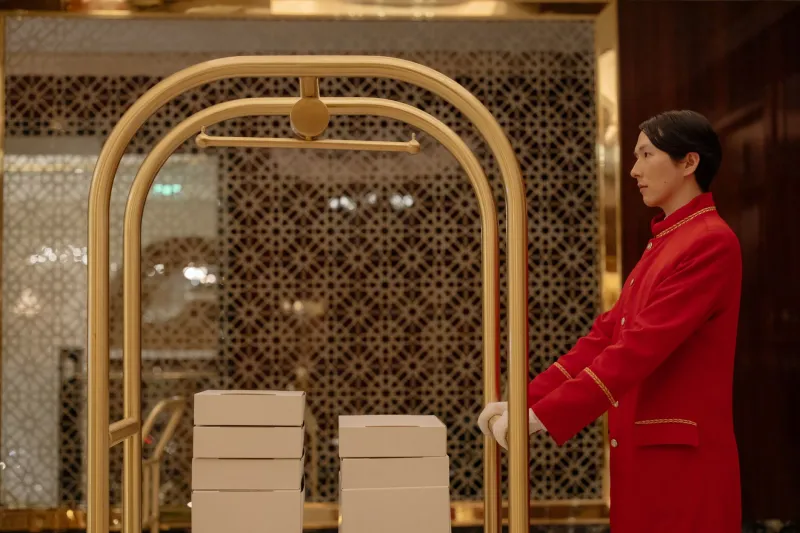
The city after midnight has its own civil service. It is not elected, it does not appear in any manifesto, and it operates from behind a slab of polished wood under a low lamp. Britain’s hotel night porters are the quiet gatekeepers of the after-dark economy: part concierge, part counsellor, part lockout negotiator, part human search engine for the nearest place still selling chips.
The desk as a city guide
Marcus has worked the night desk at a small hotel on the edge of Soho for eleven years. By day, the lobby belongs to luggage and lattes. By 1AM, he says, it becomes a kind of unofficial citizens’ advice bureau. “People don’t ask me for the British Museum at that hour,” he says. “They ask me where they can go that won’t make them feel worse about themselves.”
His recommendations are not the ones in the glossy folder. They are the places with a light on, a tolerant door policy and a owner who knows that a 2AM customer is usually looking for comfort rather than cuisine. He has drawn maps on the back of check-in cards. He has talked guests out of walking to a club in entirely the wrong direction. He has, more than once, explained that the night bus is not a rumour invented by Londoners to frighten tourists.
The porter’s city is a parallel map. It includes the kebab shop that stays open for the theatre crowd, the mini-market where the owner will sell you a phone charger and a packet of digestives without judgment, and the side street where taxis actually stop rather than simply slow down and smirk.
Keys, lockouts and the art of the quiet intervention
In Manchester, Donna works the desk of a Northern Quarter hotel that sees its fair share of hen dos, gig-goers and people who have mislaid their entire personality somewhere between the bar and the taxi rank. Her speciality is the lost key. Not the plastic card — the actual key. The one a guest has posted through the wrong door, dropped in a plant pot, or handed to a friend who has since vanished into the night.
“You learn to read the panic,” she says. “There’s the angry panic, which is usually embarrassment. There’s the tearful panic, which is usually a row with someone. And there’s the very calm panic, which is the one to watch.”
Night porters are not security guards, but they perform a kind of soft security. They notice who comes back alone. They notice who does not come back at all. They keep an eye on the guest who has had one too many and is now explaining their family history to a potted fern. They know when to call a taxi, when to offer water, and when to stand in the doorway and say, gently but firmly, that the bar is closed and the night is over.
Ewan, who works a Glasgow hotel near the Merchant City, calls it “the 3AM guest list.” It is not written down. It is a mental ledger of who is safe, who is wobbly, who needs a nudge and who needs to be left alone with a cup of tea. “You’re not running a club,” he says. “But you are running a room. And a room after midnight has a mood. Your job is to keep the mood from turning.”
The strange requests
The requests are where the night shift becomes folklore. Marcus has been asked for a tailor at 2AM, a priest at 3AM and a “really good, really quiet” place to have an argument at 4AM. Donna once had a guest ask her to post a letter to themselves so it would arrive after they got home, as proof they had been away. Ewan has been asked to settle a bet about the closing time of a pub that had shut down in the 1990s.
Then there are the confessions. Not the dramatic ones, usually. The small ones. The guest who admits they are not really in town for a conference. The person who has just walked out of a relationship and booked a room because they could not face the flat. The couple who have had a lovely evening and are now quietly terrified of the morning.
“You don’t fix it,” says Donna. “You just don’t make it worse. Sometimes that’s the whole job.”
A 4AM philosophy
The night porters I speak to are wary of being romanticised. They are not mystics. They are people who have learned to stay awake, stay calm and keep the coffee coming. But there is a philosophy in it. Ewan puts it best: “Nothing good happens after 4AM, they say. But plenty of quiet things happen. A taxi. A glass of water. A guest finally going to bed. You take the quiet things.”
By the time the first delivery vans rattle past, the ledger is nearly closed. The lobby has that particular smell of cleaning products and last night’s perfume. The night porter hands over to the day team with a few murmured notes and the faint air of someone who has seen the city in its dressing gown.
Britain’s after-dark hospitality is often talked about in terms of bars, clubs and kitchens. But behind the front desk, under the low lamp, there is another shift happening. It is less glamorous and more useful than most of what happens after midnight. It is the quiet work of getting people home, getting them calm and getting them to morning. The night porter does not expect a guest list. He is the guest list.